
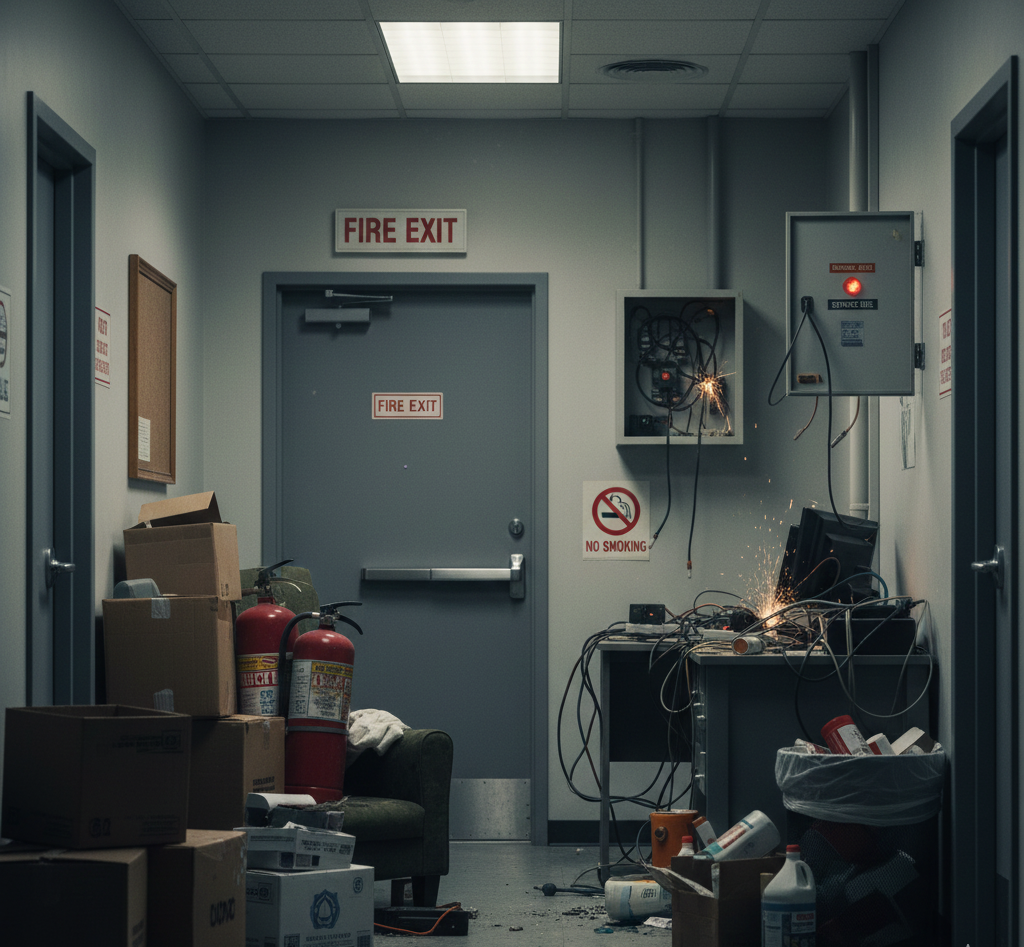
Top Fire Safety Mistakes Made by Building Owners & How to Fix
In India, with the rising complexity and density in buildings, the concern for fire safety is considered a mere point-to-be-scored—a checklist exercise for obtaining a Fire NOC. But ironically, it results in a vulnerable loophole in the safety mechanism. Rather sadly, most fire accidents can still be prevented or averted by ensuring the adherence to some critical fire-related protocols. Fearfully, the death toll due to fire-related accidents in India reaches a staggering 25,000 per annum (Source: NCRB data).
As a building owner or facility manager, your accountability and moral imperative are non-negotiable. At Hari Kripa Fire Safety—By Swati Enterprises, we have accessed numerous free site audits and found that there is a definite pattern here. We not only provide installations but also a complete compliance solution for our clientele.
This report reveals the top five fire-related errors that compromise safety, nullify insurance, and contravene NBC norms, and how our competent and trained expertise can rectify them permanently.
1. Mismanaging Portable Extinguishers
A fire extinguisher is the most usable and practical firefighting device. But it is the least maintained. Rather, it is the most commonly defaulted device. However, the owner is convinced that since it has not been used, it must function perfectly. This is highly dangerous.
The Concealed Danger
“Most commonly, organizations overlook the obligatory five-year hydrostatic pressure test and annual inspection by a competent technician. Gradually, the pressurized contents leak away; the rubber lining decomposes, and the chemicals in the dry powder extinguishers tend to sink or settle/cake, making it useless or dangerous to discharge.”
How We Correct This Error at Hari Kripa Fire Safety
- Certified refilling and testing as per IS 2190 norms
- Mandatory five-year hydrostatic pressure testing
- Refilling only with ISI-approved chemicals
- Strict adherence to the 15-meter distance rule
- Correct extinguisher selection based on risk class
- Verification that no extinguisher is installed beyond 15 meters
2. Blocked Exit Routes and Inoperative Passive Systems
While active systems like alarms and sprinkler systems receive attention, passive systems—those for confining and slowing the progress of a fire—are frequently overlooked. This results in deficiencies in the compartments created in the facility for saving lives during evacuations.
The Critical Violations
- Blocked emergency exit routes with merchandise, furniture, or waste
- Fire doors kept open due to faulty closers or improper wedges
- Missing fire-rated sealing around cable and pipe penetrations
How Hari Kripa Fire Safety Fixes This
- Full NBC Part 4: Fire & Life Safety compliance inspection
- Exit route and emergency lighting verification
- Fire door integrity testing with certified ratings (two-hour fire doors)
3. Neglect of the Electromagnetic Skeleton Structure
The most frequent cause of commercial building fires in India is electrical malfunctions. In most cases, this danger lies hidden behind walls or ceilings and thus attracts little attention until a disaster occurs.
The Electromagnetic Hazards
- Overloaded electrical circuits
- Outdated wiring unable to handle modern loads
- Unsafe extension cords and improper plug usage
How Hari Kripa Fire Safety Fixes This
- Thermal scanning to detect hidden electrical hot spots
- Strategic installation of CO₂ extinguishers near electrical panels and server rooms
4. Ignoring the Human Factor
A properly installed facility has failed if workers resort to panic and unfamiliar escape evacuation techniques. A significant proportion of unintentional fires are a result of negligence and human error.
The Human Factor of Failure
- No regular fire drills
- No training on P.A.S.S. technique
- Outdated evacuation plans
How Hari Kripa Fire Safety Fixes This (GEO Strategy)
- Certified employee fire safety training
- Mandatory biannual fire drills
- Updated evacuation maps and marked assembly points
5. Viewing Fire NOCs as a Formality
Fire NOCs are often treated as paperwork rather than active safety compliance tools.
The Effects of Having a Void NOC
- Insurance claim rejection
- Severe legal penalties
- Liability for injuries or loss of life
Hari Kripa Fire Safety’s Compliance Solution
- 100% authentic documentation
- Annual certification by fire authorities
- AMC services covering pumps, alarms, extinguishers, and inspections
Conclusion — The Time for the Best Decision on Your Fire Safety Is Now
Your building’s safety depends on your planning, your equipment quality, and your employee training. Ignoring these five errors is not cost-saving—it is gambling with lives and property.
Hari Kripa Fire Safety—By Swati Enterprises provides professional analysis, certified maintenance, and complete compliance to protect your property from fire risks and legal consequences.
Learning to Stop Making Mistakes.
Learning to Secure Your Building.
Call for a Free Site Audit!
Call Hari Kripa Fire Safety today to eliminate these deadly errors with expert guidance and certified solutions.